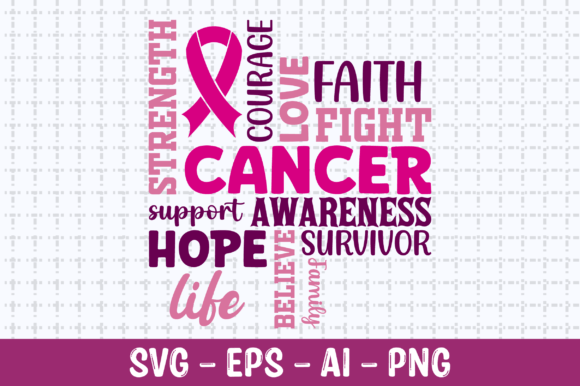
Cancer Awareness Support Survivor SVG Review
As a designer who spends half my life staring at stitch previews and the other half troubleshooting thread breaks, I approach every new machine embroidery design with a healthy dose of skepticism. We have all downloaded files that look pristine on screen but turn into a tangled mess of bird’s nests on the hoop. That is why I took a close, practical look at the Cancer Awareness Support Survivor SVG before committing it to any client project or personal inventory. This isn’t just about aesthetics; it is about whether this graphic holds up under the needle.
The first impression of this file is one of quiet strength. It avoids the overly cluttered visuals that often plague awareness-themed graphics, opting instead for a clean, recognizable layout. For those of us in the Crafts and Graphics space, we know that simplicity is often harder to execute than complexity. The visual personality here feels respectful and empowering, which is crucial when creating items meant to offer comfort or celebrate resilience. It creates a mood of solidarity without feeling heavy or clinical, making it a versatile asset for various emotional contexts.
Real-World Application: The Tote Bag Test
To truly evaluate an embroidery file, you have to imagine it on a physical object. I recently had a request for a set of custom tote bags for a local support group fundraiser. This was the perfect scenario to test how the Cancer Awareness Support Survivor SVG would perform in a real-life setting. Tote bags are tricky because canvas has a distinct weave and texture that can swallow fine details if the stitch density isn’t right.
I loaded the SVG into my software and resized it to fit a standard 5x7 hoop. The vector nature of the file meant the scaling was smooth, with no pixelation issues—a significant advantage over raster-only images. When I ran a test stitch on a scrap piece of cotton canvas, the result was crisp. The lines remained distinct, and the overall shape held its integrity. For an Etsy seller or small shop product creator, this reliability is gold. You do not want to waste expensive blank goods on a design that puckers or loses definition.
Versatility Across Product Lines
Beyond tote bags, this design shows promise across a wide range of custom apparel and home goods. Because the layout is balanced, it works exceptionally well as a sweatshirt embroidery piece. Placed on the left chest, it serves as a subtle badge of honor. On the back, scaled up, it becomes a bold statement. The clean lines also translate well to embroidered patch creation. If you are running a craft business that sells iron-on or sew-on patches, this graphic provides a professional finish that customers trust.
I also considered its use in baby embroidery projects, such as onesies or soft blankets. Here, caution is key. While the design is meaningful, you must ensure the stitch type is soft enough for sensitive skin. If the original file relies heavily on dense fill stitch areas, you might need to adjust the density or switch to a lighter running stitch outline for infant items. However, for older children’s apparel or adult holiday embroidery gifts, it fits seamlessly into seasonal collections focused on hope and community.
Technical Considerations for Embroiderers
Let’s talk about the technical side. The package includes AI, EPS, SVG, and Transparent PNG files. As a reviewer, I appreciate having the vector formats (AI and EPS) because they allow for precise editing before converting to an embroidery project format. However, remember that these are graphic files, not native machine embroidery formats like PES or DST. You will need to digitize them or use auto-digitizing software carefully.
When working with this digital embroidery file, pay attention to stitch density. If you are stitching on stretchy fabric, such as a jersey t-shirt, a high-density fill can cause pulling. Always use a proper stabilizer—cut-away for knits, tear-away for wovens. I recommend testing the design on scrap fabric first to check thread color contrast. A monochrome look can be striking, but ensuring the thread stands out against the fabric texture is vital for visibility.
Be cautious with small hoop sizes. If you shrink the design too much, tiny details may merge together. Also, avoid placing it on highly textured fabrics like thick wool coats unless you simplify the stitch path. Curved surfaces, like caps, require careful hooping to prevent distortion of the graphic’s proportions.
Commercial Value and Brand Consistency
For commercial embroidery professionals, the value of this design lies in its emotional resonance and professional appearance. A well-executed personalized gift featuring this motif can command a higher price point because it speaks to a deep personal narrative. It enhances brand consistency for shops that focus on meaningful, cause-related merchandise. Customers engage more with products that feel authentic, and this design avoids cheap clip-art aesthetics.
When creating printable mockup previews for your online store, use the transparent PNG included in the pack. It allows you to overlay the design on various product photos easily, giving potential buyers a clear idea of the finished product. This transparency helps build buyer engagement and trust, as they can visualize the item on a shirt, mug, or bag before purchasing.
Final Designer Notes
Before you list this as a design asset in your shop or use it for a client, double-check the licensing terms. While the file is ready for instant download, always confirm whether the license covers unlimited commercial sales of physical items. Additionally, inspect the vector paths in Illustrator or similar software to ensure there are no stray anchor points that could complicate the digitizing process.
In summary, the Cancer Awareness Support Survivor SVG is a solid, versatile addition to your library. It respects the subject matter, performs well on standard fabrics, and offers the flexibility needed for both handmade product creators and digital sellers. Just remember to treat it as a starting point for your craftsmanship, adjusting stitch types and densities to match your specific machine and material constraints. With careful execution, it becomes more than just a graphic; it becomes a tangible symbol of support.