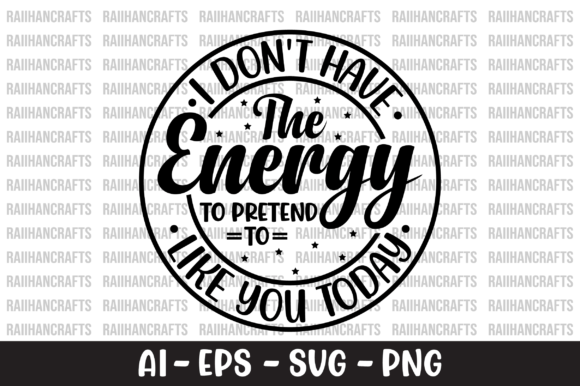
I Don’t Have the Energy to Pretend: A Designer’s Review
As an embroidery designer who has spent years digitizing files and reviewing thousands of machine embroidery design options for clients, I have developed a keen eye for what works in the real world. We often get caught up in intricate florals or complex monograms, but sometimes the most powerful designs are those that speak directly to the human experience. Recently, I pulled the I Don t Have the Energy to Pretend file from my library to evaluate it for a potential client project. This isn’t just another cute phrase; it is a statement piece that requires careful handling to ensure it lands correctly on fabric.
First Impressions and Visual Personality
When I first loaded the embroidery file into my software, the immediate impression was one of bold simplicity. The layout suggests a design that relies heavily on typography rather than decorative flourishes. For a Graphics category item within the broader Crafts niche, this minimalism is a strength. It creates a mood of honest exhaustion and relatable humor. The visual personality is dry, witty, and unapologetic. However, from a technical standpoint, text-based designs are notoriously tricky. The success of I Don t Have the Energy to Pretend depends entirely on legibility and stitch quality. If the letters are too thin, they disappear into the fabric texture. If they are too dense, the garment puckers.
Real-World Application: The Sweatshirt Test
To truly understand how this design performs, I simulated a real-life scenario. Imagine a customer ordering a custom sweatshirt for a friend who has had a particularly draining year. They want something funny but meaningful. I placed the design on a digital mockup of a heather grey crewneck. The contrast was excellent. The phrase resonates deeply in today’s culture, making it a high-potential seller for any Etsy seller or small shop product creator.
Beyond sweatshirts, this design is versatile. It works exceptionally well as a tote bag design. Canvas bags have a tight weave that supports text embroidery beautifully, allowing the stitches to sit flat without sinking into the fibers. I also considered it for a personalized gift like a kitchen towel or apron. In these contexts, the humor feels at home. It transforms a standard household item into a conversation starter. For commercial embroidery projects, such as staff uniforms for a laid-back cafe or creative agency, this design could serve as a fun, morale-boosting element, provided the brand voice aligns with the candid tone.
Technical Considerations for Stitching
While the concept is strong, the execution requires attention to detail. Since the product description notes that the files are compressed in a ZIP file, you must extract them before use. However, the description does not specify exact stitch counts, file formats, or recommended hoop sizes. This is a critical gap. Before committing to a final embroidery project, you must open the file in your digitizing software to inspect the data.
Check the stitch density immediately. Text designs often use satin stitch for smaller letters and fill stitch for larger ones. If the satin columns are too wide, they will snag easily. If the fill is too dense, it will create a stiff patch on a soft garment. I recommend testing the design on scrap fabric first. Use a medium-weight cut-away stabilizer for knit fabrics like t-shirts and sweatshirts to prevent distortion. For woven fabrics like tote bags, a tear-away stabilizer might suffice, but always test first.
Pay close attention to the small details. Phrases like this often have tight kerning. Ensure that the letters do not touch or overlap in a way that causes thread buildup. If the design includes tiny serifs or intricate ends on the letters, consider whether they will survive frequent washing. For a finished product meant to last, simplicity in stitching often equals durability.
Fabric and Hoop Constraints
Where should you use this design carefully? Avoid placing it on highly textured fabrics like thick wool or looped terry cloth unless you are using a large hoop and high-contrast thread colors. The texture can obscure the letters, ruining the message. Similarly, be cautious with stretchy fabrics. If the hoop size is too small for the length of the phrase, you may need to split the design or reduce the size, which could compromise readability.
Dark fabrics present another challenge. If you are stitching white thread on black fabric, ensure your machine tension is perfect. Any loose threads will show up starkly against the dark background. Conversely, stitching dark thread on dark fabric requires precise lighting and high-quality thread sheen to make the text pop. Always compare light and dark fabric backgrounds in your printable mockup stage to gauge visibility.
Commercial Viability and Brand Consistency
For craft business owners, this design offers high engagement potential. It taps into a specific emotional niche that buyers love to share on social media. When used in custom apparel or as an embroidered patch, it adds value through relatability. However, professionalism is key. Ensure that the stitching is clean and the backing is trimmed neatly. A sloppy finish undermines the witty message.
Before selling, confirm the licensing terms. The description mentions it is perfect for t-shirts, mugs, and other purposes, but it does not explicitly state commercial rights. As a responsible designer, you must verify whether you can sell finished items or if the license is for personal use only. Never assume. Check the included documentation in the ZIP file or contact the seller if unclear.
Final Verdict
The I Don t Have the Energy to Pretend design is a solid addition to any digital library of design assets. It is not just a graphic; it is a cultural moment stitched into fabric. Its success lies in its honesty and simplicity. For the experienced maker, it presents few technical hurdles if proper precautions are taken regarding stabilizer and thread choice. For the beginner, it serves as a good lesson in managing text-based embroidery.
Whether you are creating a holiday embroidery gift for a stressed-out sibling or stocking your online store with best-selling baby embroidery items for new parents who need a laugh, this design fits. Just remember to test, stabilize, and verify your rights. When done right, this piece doesn’t just decorate a garment; it connects with the wearer. That is the mark of a truly effective design.