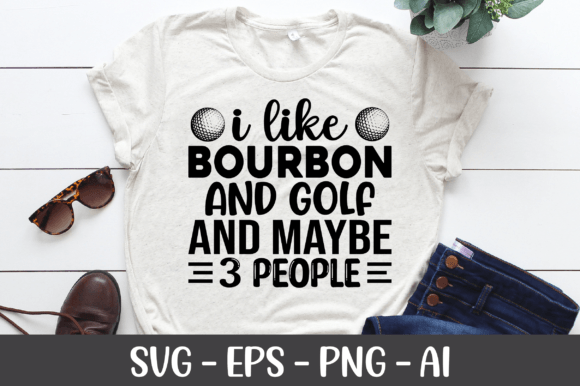
Reviewing the I Like Bourbon and Golf SVG
As a designer who has spent countless hours digitizing and stitching out patterns for clients, I have learned that not every cute graphic translates well to thread. When I first pulled up the I Like Bourbon and Golf and Maybe SVG file, my immediate reaction was one of cautious optimism. The concept is playful and targets a specific, passionate demographic, but the real test is always in the execution. Does this design hold up under the needle, or does it become a mess of tangled threads on a finished garment?
This review comes from the perspective of someone who needs reliable assets for real-world production. Whether you are an Etsy seller looking to expand your catalog of personalized gifts or a hobbyist making a custom sweatshirt for a friend, understanding the practical limitations and strengths of this digital embroidery file is crucial before you hit the start button.
First Impressions and Visual Personality
The mood of this design is undeniably relaxed and humorous. It speaks to a lifestyle that balances leisure with a touch of indulgence. Visually, the layout appears clean, which is a good sign for embroidery. Complex, overly detailed illustrations often fail when converted to stitch because the machine cannot replicate fine lines as precisely as a printer. This design seems to rely on bold shapes and clear typography, which suggests it will stitch out cleanly without excessive jump stitches or confusing color changes.
For those of us working in the Crafts category, specifically within Graphics for cut files and embroidery, clarity is king. The theme here is straightforward. It does not try to be everything to everyone. Instead, it offers a niche appeal that can drive engagement in a small shop product line. The visual personality is friendly and approachable, making it an excellent candidate for items meant to spark conversation, such as a tote bag design used at a weekend market or a casual apron for a backyard barbecue.
Real-World Application Scenarios
To truly evaluate this asset, I imagined placing it on several common substrates. The most natural fit is undoubtedly custom apparel. Picture this design stitched onto the left chest of a high-quality polo shirt or centered on the back of a lightweight hoodie. The humor lands better when it is part of a wearable statement piece. For a sweatshirt embroidery project, the design’s scale would need to be adjusted to ensure legibility without becoming too dense.
Beyond apparel, I considered its use on home goods. A kitchen towel featuring this motif could be a hit as a holiday gift for the dad who loves both the fairway and a good pour. However, terry cloth presents challenges due to its texture. If you choose this route, you must use a strong cut stabilizer to prevent the fabric from puckering around the stitch areas. Similarly, a tote bag made of canvas would provide a sturdy, flat surface that allows the thread colors to pop, enhancing the overall handmade product aesthetic.
For Etsy sellers, versatility is key. This design could also work as an embroidered patch if you digitize it with a satin stitch border. Patches are trending, and they allow customers to apply the design to items that are difficult to hoop, such as structured caps or thick denim jackets. This expands the commercial embroidery potential significantly beyond standard flat garments.
Technical Considerations for Stitching
While the concept is strong, technical execution requires attention to detail. Since this is a digital download containing vector formats like AI, SVG, and EPS, you likely need to convert these into a machine-readable embroidery file format compatible with your specific hardware. This step is critical. Vector graphics do not automatically translate to perfect stitch paths. You must check the stitch density carefully.
If the original graphic has large solid areas, converting them directly to fill stitch can result in a heavy, stiff patch that pulls on the fabric. I recommend breaking up large fills with running stitch textures or using applique design techniques if the software allows. Applique can reduce bulk and add a professional, layered look that appeals to buyers of boutique branding items.
Fabric choice matters immensely here. On stretchy fabrics like jersey knits used for baby embroidery or t-shirts, the tension must be balanced perfectly. A design that is too tight will cause the garment to warp after washing. Always test the design on scrap fabric first. Do not skip this step. Check how the thread colors interact with the background. High contrast is essential for readability, especially if the text elements are small.
Navigating Limitations and Fabric Textures
There are scenarios where this design should be used with caution. Small hoop sizes may require scaling down the graphic, which could render any smaller text elements illegible. If the phrase includes tiny letters, they might merge together during stitching, turning into a blob of thread. Inspect the smallest details in your preview software before loading the file onto your machine.
Textured fabrics, such as corduroy or heavy wool, can obscure fine details. If you are stitching on dark fabric, ensure you are using high-quality rayon or polyester threads that have enough sheen to stand out. Matte threads on dark backgrounds can disappear, reducing the visual appeal and perceived value of the finished product. Additionally, curved surfaces like caps require specialized digitizing to account for the distortion caused by the curve. A flat SVG file will not automatically adjust for this, so manual tweaking of the stitch angles is necessary for professional results.
Enhancing Brand Consistency and Value
From a business standpoint, using cohesive design assets like this helps build brand consistency. If your small shop focuses on leisure, sports, or humorous personalized gifts, this design fits seamlessly into that narrative. It enhances customer trust because it shows you understand your audience’s interests. A well-executed embroidery project signals professionalism, whereas a poorly stitched one can damage your reputation.
When creating printable mockups for your online listings, ensure the digital representation matches the physical reality. Buyers engage more with products that look tangible and high-quality. Use this design to create lifestyle images that show the item in use, such as a golf bag accessory or a cozy lounge set. This context helps buyers visualize the product in their own lives, increasing the likelihood of purchase.
Final Designer Notes
Before you commit to a full production run, remember that licensing terms vary. Although you receive multiple file formats in the zip package, including AI and EPS, you must confirm whether the license permits commercial use of the finished physical items. Most digital embroidery file creators allow you to sell the physical stitched product, but reselling the digital file itself is usually prohibited. Always read the specific terms provided by the creator.
Test the design in black and white mockups to check for contrast issues. Compare how it looks on light versus dark fabric backgrounds. Use the appropriate stabilizer for your fabric weight—cut stabilizer for stretchy knits and tear-away for stable wovens. By taking these practical steps, you ensure that the I Like Bourbon and Golf and Maybe SVG becomes a profitable and beautiful addition to your craft business inventory, rather than a frustrating experiment in wasted thread.