Reviewing the "Who Says I Can't Cook" SVG for Stitching
As a designer who has spent countless hours digitizing and testing embroidery files, I approach every new machine embroidery design with a mix of curiosity and skepticism. We have all seen trendy text-based graphics that look fantastic on a screen but turn into a tangled mess under the needle. Recently, I evaluated the Who Says I Can t Cook You Obviously SVG to determine if it holds up in real-world production. This isn’t just about whether the file opens correctly; it is about how this specific graphic translates into a tangible, high-quality handmade product.
The Visual Personality and First Impressions
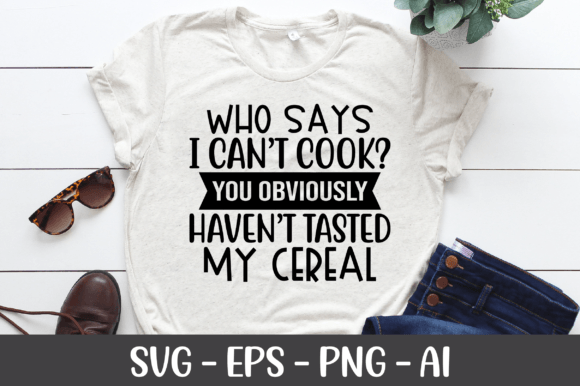
The phrase "Who Says I Can't Cook? You Obviously Haven't Tasted My Cereal" carries a distinct mood. It is playful, self-deprecating, and relatable. From a design perspective, this humor relies heavily on typography. The layout needs to balance the longer sentence structure without becoming visually cluttered. When I first loaded the digital embroidery file, I looked for clean vector paths and logical segmentation. For a joke to land on fabric, the readability must be instant. If the viewer has to squint to read the punchline, the design fails.
This piece fits squarely into the Crafts and Graphics categories, but its application is broader. It feels native to kitchen textiles and casual apparel. The visual personality suggests a relaxed, modern aesthetic rather than a formal or traditional one. It is the kind of design that invites a smile, making it an excellent candidate for gifts that prioritize personality over prestige.
Real-World Application: The Apron Test
To truly understand the viability of this design, I imagined a specific client project: a custom embroidered apron for a friend who proudly admits their culinary skills are limited to boiling water and pouring milk. This is where the Who Says I Can t Cook You Obviously SVG shines. An apron provides a large, flat canvas, allowing the text to breathe.
In this scenario, the design would likely serve as the central focal point. I would recommend using a bold satin stitch for smaller accent elements if present, but primarily relying on a clean fill stitch or single-line running stitch for the lettering, depending on the font weight. The key here is contrast. On a white or light beige cotton apron, dark thread colors like charcoal, navy, or deep red would ensure the message pops. The humor aligns perfectly with the utility of the item, creating a cohesive narrative between the object and the decoration.
Versatility Across Products
Beyond aprons, this design has significant potential in other areas of commercial embroidery. Consider a tote bag design for a grocery run or a library visit. The casual nature of the quote matches the everyday utility of a canvas tote. Similarly, it could work well on a sweatshirt embroidery project, particularly for college students or young adults who appreciate ironic humor.
However, scale matters. While it might work on a pillow cover, placing it on a baby embroidery item requires caution. The sentiment is adult-oriented humor. It fits better in a bachelor pad, a dorm room, or a casual kitchen setting than in a nursery. For holiday embroidery gifts, such as a Secret Exchange present for a coworker, it is a safe and amusing choice that avoids being overly personal while still feeling thoughtful.
Technical Considerations for Embroiderers
From a technical standpoint, text-heavy designs present unique challenges. The primary concern with the Who Says I Can t Cook You Obviously SVG is legibility at smaller sizes. If you attempt to shrink this design to fit a small hoop size, such as a 4x4 inch hoop for a cap or a patch, the thinner strokes of the letters may merge or become indistinct.
I advise checking the stitch density carefully. If the original digitizer packed too many stitches into the letterforms, it can cause puckering, especially on lighter fabrics. Always use an appropriate stabilizer—a cut-away stabilizer is often safer for garments that will be washed frequently, while tear-away might suffice for stable home decor items like tea towels.
Textured fabrics also pose a risk. If you are stitching this onto a fluffy towel or a thick fleece, the details can get lost in the pile. In such cases, consider adding a backing layer or choosing a smoother fabric like twill or polished cotton. For curved surfaces like caps, ensure the design is centered properly to avoid distortion during the hooping process.
Business Value and Customer Appeal
For Etsy sellers and small shop owners, this type of design offers strong commercial potential. It targets a specific niche: people who do not take themselves too seriously. This emotional connection drives sales. When customers see a personalized gift that reflects their inner monologue, they are more likely to engage.
Using this embroidery file in your product lineup can enhance brand consistency if your shop focuses on witty, modern, or lifestyle-oriented goods. It adds variety to your catalog without requiring complex multi-color changes, which keeps production time low and profit margins healthy. However, always verify the licensing terms. Since this is a digital download, ensure you have the right to use it for finished physical products if you plan to sell them.
Practical Designer Notes
Before committing to a full production run, follow these steps:
- Test on Scrap Fabric: Always stitch out a sample on the same material you intend to use for the final product. This reveals any tension issues or thread breaks.
- Check Thread Contrast: View your design in black and white mockups. If the text disappears against the background in grayscale, it will likely lack impact in real life.
- Inspect Small Details: Zoom in on the vector file. Look for stray nodes or overlapping paths that could cause machine errors.
- Confirm Hoop Size: Ensure the design dimensions fit comfortably within your machine’s maximum hoop area, leaving room for stabilization.
- Review Licensing: Confirm whether the license allows for commercial use of finished items or if it is strictly for personal projects.
The Who Says I Can t Cook You Obviously SVG is a solid addition to any designer’s library, provided it is used with attention to scale and fabric choice. It transforms a simple digital asset into a conversation-starting finished product. By respecting the technical limits of embroidery and understanding the audience for this humor, you can create items that are not only well-stitched but also genuinely enjoyed by the recipient.